
How RMA Grading, Vendor Returns, and Blind Cycle Counts Protect Inventory Valuation
Forward logistics gets almost all the attention during an ERP rollout. Teams map purchase orders, work orders, and customer shipments down to the click, yet leave customer returns, defective supplier send-backs, and warehouse cycle counts running on clipboard notes and loose adjustment screens. Within two quarters, the inventory subledger drifts away from physical bins, and finance spends month-end chasing unexplained gross margin swings.
Core Takeaway
Inventory valuation breaks fastest at the edges: customer docks, vendor send-backs, and floor adjustments. Maker-checker approvals, outbound cost-layer restoration, status locks, and blind cycle counts stop margin leaks before they reach the General Ledger.
Why reverse logistics and open stock counts distort gross margin
Most valuation errors do not happen on normal shipments. They creep in when goods move backward.
Picture a distributor returning twelve serialized valve assemblies after a project change. In a loosely controlled system, the same sales coordinator who entered the return approves the credit, the dock receives fourteen units against a twelve-unit authorization, and the warehouse puts damaged boxes back into pickable bins at today's standard cost instead of the original shipment cost layer. If a warranty replacement line carried an explicit zero price, a sloppy screen might even overwrite it with list price and trigger a bad credit memo.
Supplier returns and floor counts fail for the exact same reason. A buyer ships cracked castings back to a foundry on a manual packing slip, then edits the document after the truck leaves so the vendor debit never matches the receipt. A week later, warehouse staff walk the aisles holding printed sheets that already show expected book quantities. Nobody recounts a bin that looks close enough, so phantom stock stays on the balance sheet until a customer order comes up short.
Forward shipments follow a paved highway. Margin leaks happen on customer returns, vendor send-backs, and unverified floor adjustments.
Enforcing maker-checker RMA grading and original cost-layer restoration
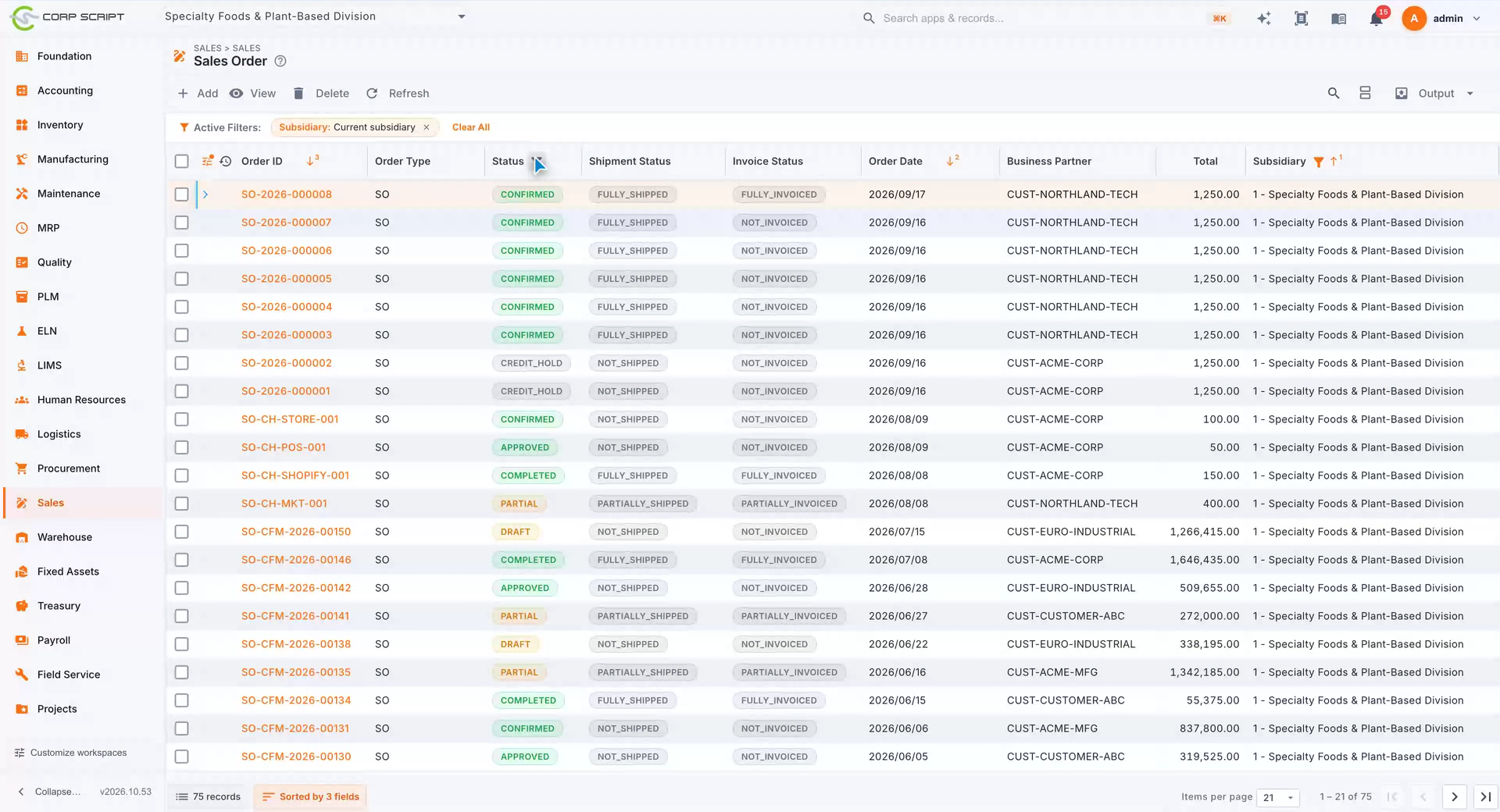
Closing the customer return loop starts before a box ever hits the receiving dock. In CorpScript, a Return Merchandise Authorization (RMA) requires at least one valid line before routing for approval and enforces Segregation of Duties so the person who created the return cannot approve it. Once approved or received, the authorization locks against deletion while preserving explicit zero unit prices on warranty replacement lines.
Dock execution enforces strict quantity and condition gates. Receiving screens block zero or negative quantities and reject any receipt that exceeds the remaining unreceived balance on the return line.
Condition grading then decides both physical routing and accounting valuation. Sellable items return to stock on hand at their original outbound shipment cost layer or graded net realizable value, updating cost layers, value entries, and the General Ledger together. Refurbishable serial units automatically generate a linked repair work order, while damaged returns route straight into quarantine so warehouse pickers cannot ship them back out. If a clerk logs a return receipt against the wrong lot, an atomic reversal unwinds stock on hand, valuation layers, value entries, and ledger journals in one step.
Closed-loop return and count controls in CorpScript
- 1Maker-checker RMASales & Finance
Independent approver verifies lines and locks the return.
- 2Graded dock receiptReceiving
Restores outbound cost layers, opens repair orders, or quarantines damage.
- 3Locked vendor returnProcurement
Launched from Purchase Receipt, field-locked, and posted on ship-out.
- 4Blind floor countWarehouse
Counters scan bins without book balances; negative counts are blocked.
- 5Variance post & lockController
Approved net variances post balanced journals and lock read-only.
Locking vendor send-backs and running true blind cycle counts
Outbound vendor returns need the same discipline as inbound customer returns. When incoming inspection or production catches defective supplier material, operators launch Create Vendor Return straight from the source Purchase Receipt so lot numbers, purchase prices, and currency carry over cleanly.
Once a vendor return is approved or shipped, CorpScript locks quantities, items, and pricing fields against unauthorized edits while still permitting authorized audit notes. Confirming shipment deducts the rejected lot from warehouse stock and posts balanced outbound inventory and ledger entries immediately. Buyers no longer have to chase shipping clerks to find out whether rejected castings actually left the building or whether Accounts Payable took the supplier credit.
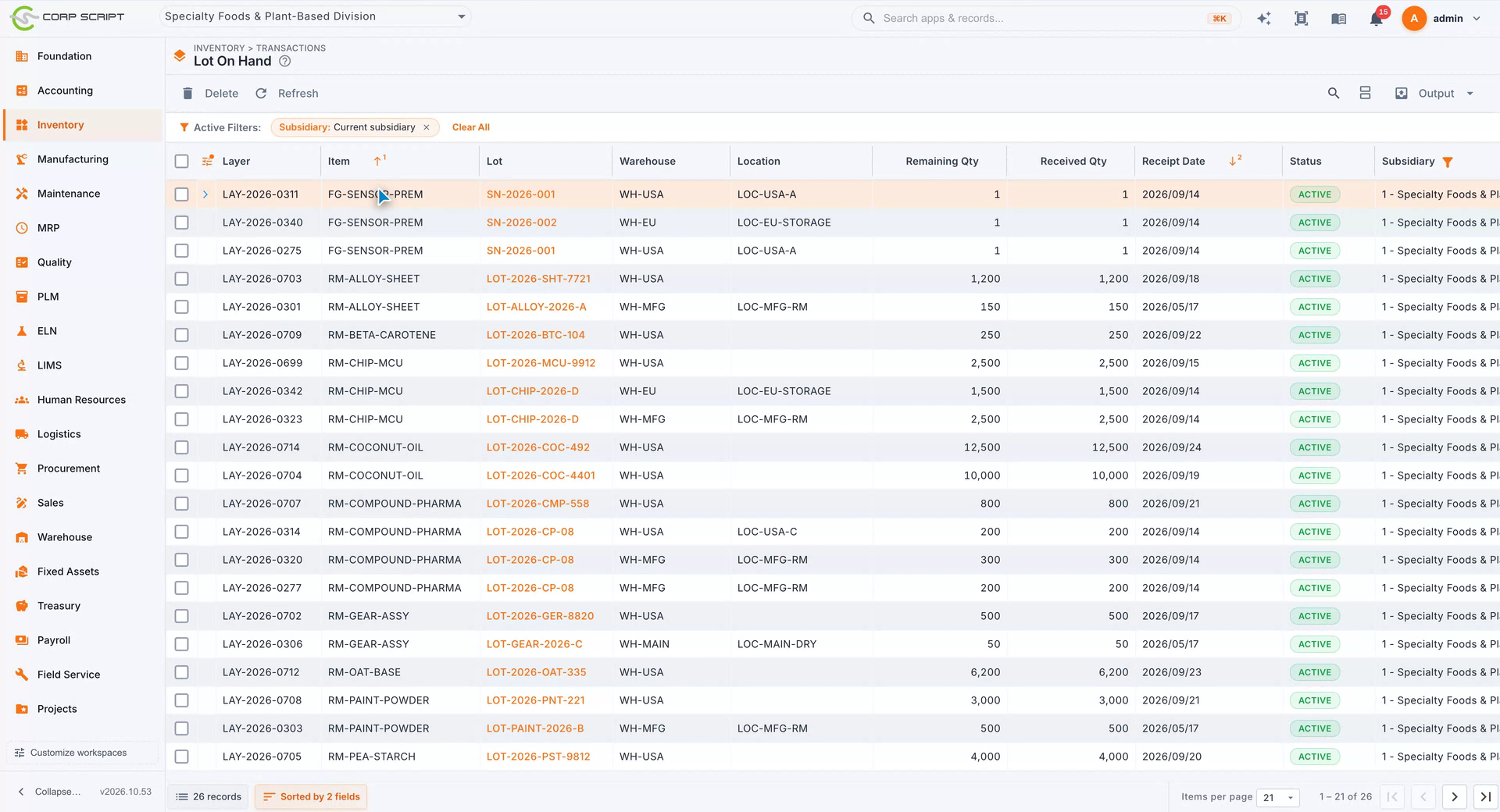
Physical inventory governance completes the loop through perpetual blind cycle counts. Hiding expected book quantities forces counters to weigh or scan what actually sits in the rack. Operators focus high-frequency ABC counts on fast-moving alloys and subassemblies rather than shutting down the whole plant for a year-end wall-to-wall count. Negative counted quantities are rejected up front, variances beyond tolerance wait for supervisor sign-off before posting balanced adjustment journals, and posted cycle count sheets lock into read-only mode so historical audit evidence stays intact.
| Control Point | Loose Adjustments | CorpScript Controls |
|---|---|---|
| Customer RMA approval | Creator self-approves | Maker-checker Segregation of Duties and locks |
| Return valuation | Arbitrary standard cost | Original outbound layer or net realizable value |
| Vendor send-backs | Manual shipping memos | Receipt-linked, locked, and posted on ship |
| Cycle counts | Sheets show book qty | Blind counts, variance sign-off, read-only lock |
Warehouse & Audit Check
Can the person who opens a customer return also approve it, over-receive it, or edit a posted cycle count sheet?
If any path is open, inventory cost layers and gross margins remain exposed to unreviewed drift.
Related Product Walkthrough · Manufacturing & Ops
Inventory Operations: Real Time Multi Warehouse Control and Lot Traceability
Track stock across multiple warehouses with dual units of measure, live Available to Promise (ATP) reservations, First-Expired, First-Out (FEFO) picking, blind cycle counts, and penny-exact General Ledger (GL) reconciliation.
Common questions
- How does CorpScript value customer returns when items come back damaged or need refurbishment?
- Condition grading at RMA receipt lets teams restore clean stock at its original outbound shipment cost layer, value downgraded stock at net realizable value, route damaged units into non-pickable quarantine, or generate a linked repair work order for serialized assemblies.
- What happens if a receiving clerk records an RMA receipt against the wrong lot or quantity?
- Authorized users can execute an atomic RMA receipt reversal, which unwinds the stock-on-hand balance, inventory cost layer, value entry, and General Ledger journal together rather than leaving orphaned manual adjustments.
- Why hide expected book quantities during warehouse cycle counts?
- When floor sheets display expected book quantities, busy operators tend to confirm the printed number instead of counting every carton. Blind cycle counting captures independent physical counts first, then routes only true net variances beyond tolerance to a manager before posting to the ledger.